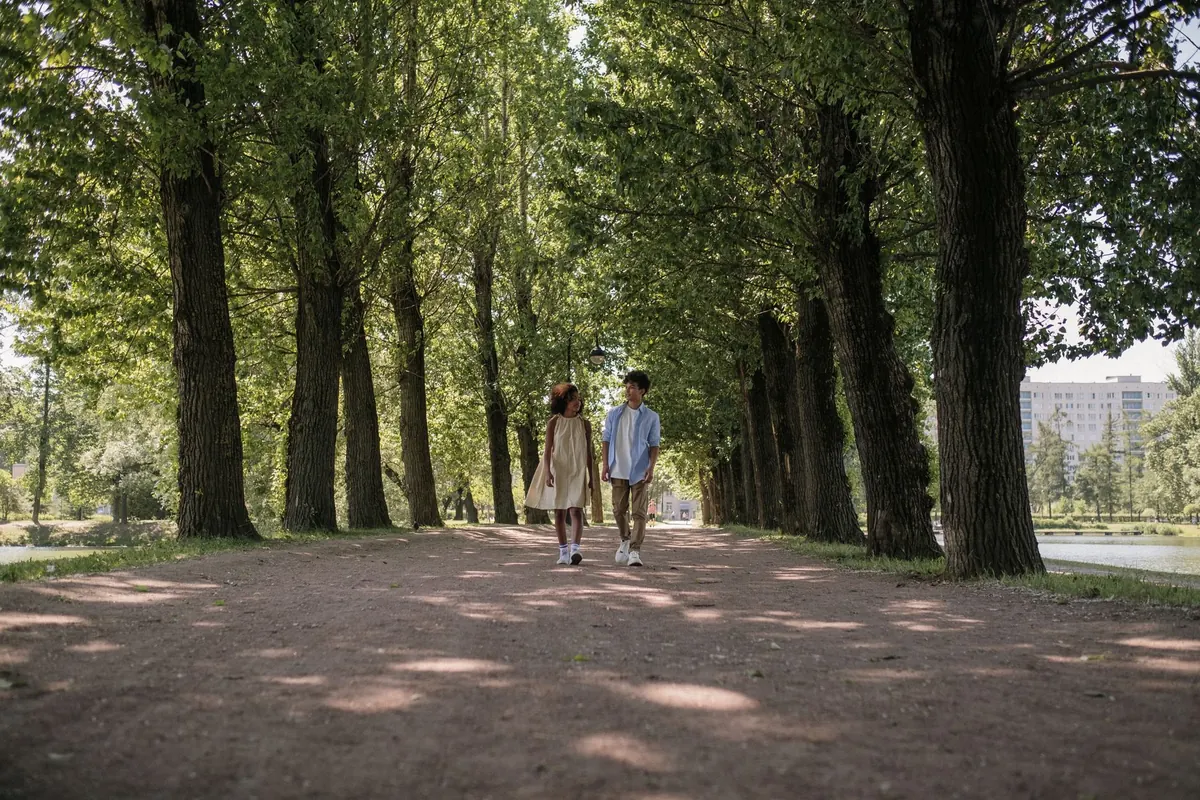
A Beginner's Guide to Mindful Walking in Local Parks
Most parks have a shortcut through them. You take the gate nearest the road, follow the path past the tennis courts, and come out the other side with no memory of the middle. The walk happened; you weren't at it.
Mindful walking is a plain remedy for that. It isn't a spiritual performance or a fitness programme, and it needs no special shoes, app or spare hour. It is walking a short, familiar loop with your attention deliberately on what you can hear, see and feel. Twice a week, in a park near your front door, it turns a route you already know into something that gives a little back.
What Mindful Walking Is, and What It Isn't
Two people can walk the same path and have entirely different afternoons. One is rehearsing a work conversation; the other is watching a blackbird work the edge of a hedge. The difference isn't the path. It's where the attention sits.
Mindful walking is choosing where your attention goes, and bringing it back when it leaves. It doesn't ask you to empty your head — a busy mind is not a failure here. Nor does it ask you to walk unnaturally slowly; the right pace is roughly the pace you'd walk if you weren't late.
What it does ask is that you're not on your phone, not listening to a podcast, and not treating the park as a corridor between two more important things. Ten minutes counts. Fifteen is generous.
Choose a Loop You Could Walk Half-Asleep
New routes are interesting, and interesting isn't the same as restful. Novelty keeps the mind busy naming things and deciding where to turn. Familiarity frees that attention up.
Pick a small park, or one loop of a larger one, that you can walk in eight to twelve minutes without thinking about directions. Ideally it's within ten minutes of home, with a bench, a path, and a bit of green that isn't manicured to within an inch of its life. Overgrown edges and scrubby corners are fine; sometimes they're better.
Before you go, settle three things and stop deliberating: the entrance you'll start from, the direction you'll walk, and roughly how long you'll stay out. Removing the small decisions leaves room for the walk itself.
Arrive Before You Walk
Most people start walking the moment they pass the gate, still carrying the momentum of the street. Give yourself ninety seconds of standing still instead.
Stand just inside the entrance, out of the way of other people. Feel your feet inside your shoes and your weight settling down through them. Take three unhurried breaths — not deep, just slower than usual — and notice the temperature of the air and which way the wind is coming from. Listen for whatever is furthest away: traffic, a lawnmower, a train. Then find the nearest sound. A dog's collar, your own coat, water in a drain.
A short arrival sequence
- Stand still and feel both feet on the ground for five breaths.
- Name one thing you can hear, one you can see, one you can feel.
- Set off at a normal pace, and let the first minute be quiet.
That sounds like a lot of ceremony for a walk in the park. It takes less time than waiting for a kettle to boil, and it makes the difference between arriving somewhere and simply passing through.
Give Your Attention Something to Do
"Be present" is unhelpful advice. Attention wanders when it has no job. Give it one. The easiest method is to rotate through three anchors, spending a couple of minutes with each.
- Sound. Count the distinct sounds you can hear — not the notes, the sources. Most parks offer six or seven, and then a few more once you're listening properly.
- Sight. Pick a single tree and look at the edges rather than the whole shape. Where leaves meet sky, where the bark changes texture, where the light sits.
- Body. Follow the roll of one foot from heel to toe for twenty steps. Then the other foot.
When you notice you've drifted
You will drift. You'll be three minutes into planning dinner before you realise you left the park entirely. That moment of noticing is the practice — not proof that it failed. Bring your attention back to whichever anchor you were on, without commentary, and carry on. Do that twenty times in a fifteen-minute walk and you've had a good walk.
Build a Routine That Survives a Bad Week
The habit rarely fails because the practice is difficult. It fails because it was designed for a week with free time in it. Plan for the week when you're late, tired and it's drizzling.
- Frequency over duration. Two ten-minute walks beat one forty-minute walk you keep postponing.
- Attach it to something. After the school drop-off, before the first Saturday coffee, on the way back from the shop. A walk with a trigger needs no willpower.
- Keep the kit by the door. A waterproof jacket and shoes that don't mind mud remove the excuse living in the hallway.
- Have a wet-weather version. Half the loop, hood up, no lingering at the bench. It still counts.
- Leave the phone in your pocket. Zipped, on silent, not in your hand. If you walk with music, wait until the first five minutes are done.
When It Feels Pointless, Slow or Slightly Silly
Self-consciousness is the most common early obstacle. Standing still at a park gate can feel as though someone is watching. In practice, almost nobody is. If it helps, stand as though you're waiting for someone — once you're moving, you'll look exactly like a person going for a walk, which is what you are.
Boredom comes second. It usually lasts about four minutes, then the senses pick up the slack: the texture of gravel, the smell after rain, the sound of a pigeon's wing on take-off. Treat the boredom as part of the walk rather than a reason to abandon it.
If walking or low mood is a concern for you, or you're returning to activity after illness or injury, have a word with your GP or a physiotherapist before building a routine around it. Mindful walking is a pleasant habit, not a treatment.
A Simple First Week
Choose your loop today. Walk it three times this week, ten to twelve minutes each, and give each outing a different anchor: sound on the first, sight on the second, the body on the third. Keep the same route and, where you can, the same time of day.
By the third walk something quietly useful happens. The park stops being scenery and becomes a place you know — a tree starting to turn, a bench where the same man reads the same paper, a corner where the wind always catches you. Nothing about the park has changed. Your attention has simply moved from the path ahead to the walk itself.
When that feels easy, add two minutes to the loop or one new thing to notice. That's the whole progression.
Photo: Ron Lach / Pexels

You Might Also Like
Pot size, uneven watering, late staking and careless feeding account for most disappointing container tomato crops. A practical guide to spotting each mistake early, plus a five-minute weekly routine.
A practical, beginner-friendly guide to choosing a small rain barrel, siting it safely, connecting it to a downpipe and putting harvested rain to work in pots and borders.